
Isaiah 42:1-4,6-7; Acts 10:34-38; Matthew 3:13-17
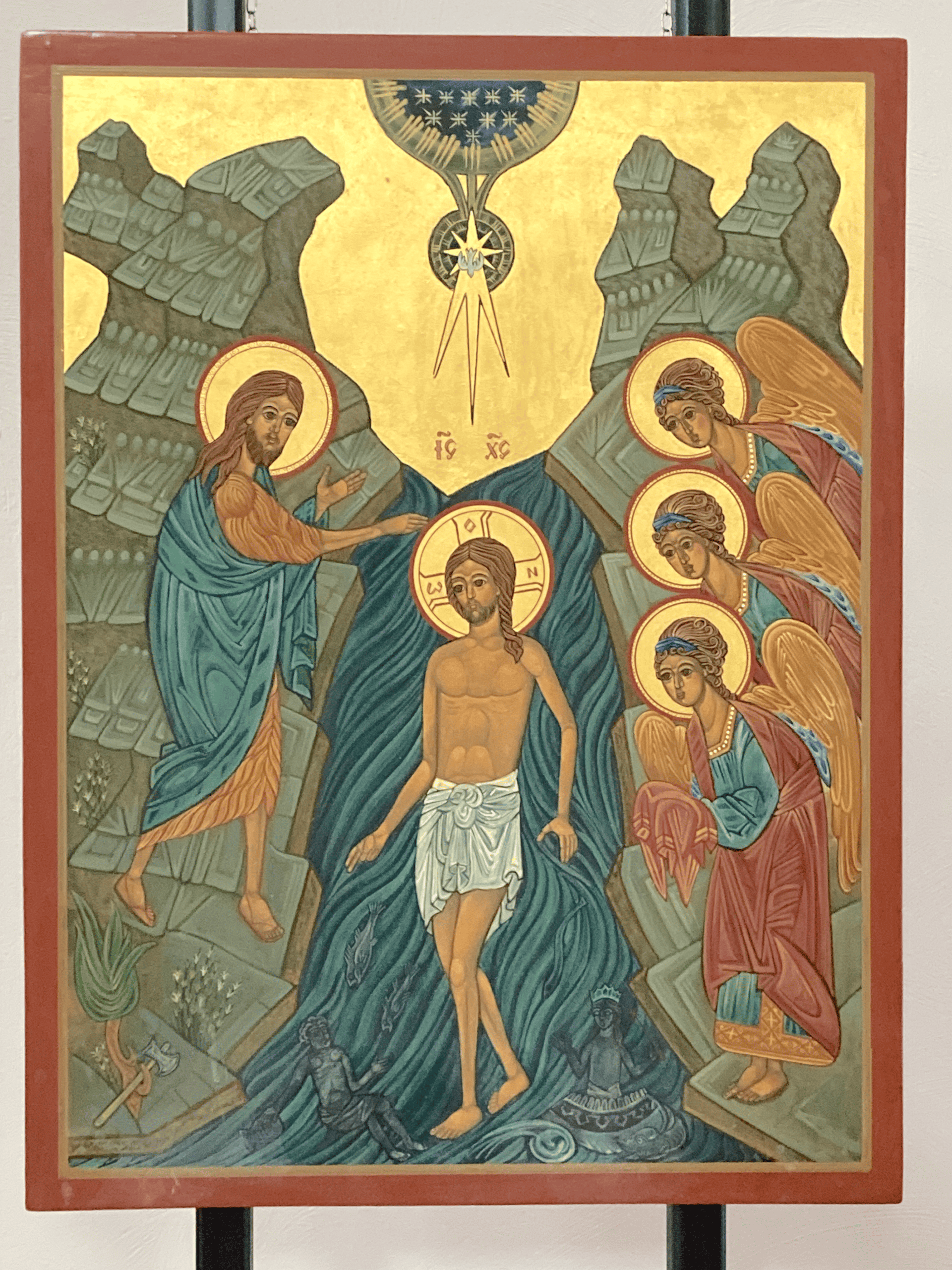 Last Sunday, the Western, our Roman Catholic Church celebrated the Epiphany of Jesus, commemorating the visit of the Magi who prophetically recognized the child Jesus as the King of Kings. For the Eastern Catholic Church, Epiphany is today, the Baptism of the Lord. Both qualify as the Epiphany, for they manifest Jesus as King of the Jews and the Son of God.
Epiphany means “manifestation or openly appearing.” Simply put, God allows Himself to be found. All the Jesus events we celebrate, even before his ministry: His birth – his Incarnation – and now his Baptism – all point to his Manifestation. Jesus did not just incarnate in obscurity; in lowliness, He draws fallen humanity to Himself and offers salvation. The immensity of the glory of God is so great that it is too much for our finite and limited nature to handle. So God entered our limited nature, our limited realm of time and space, to let Himself be seen, to be encountered. The object of all this, indeed, is to make Himself available and accessible.
In the account of Matthew that is proclaimed today, John the Baptist is presented as resisting baptizing Jesus and even insisting that Jesus baptize him. This may be Matthew’s way of addressing the general sentiment of the time, since John’s baptism is of repentance and forgiveness. If Jesus was the one the Magi proclaimed, the messianic King of the Jews, he would have no need for this kind of baptism. But Jesus insists and instructs John to do this so as “to fulfill all righteousness.” As this baptism takes place, the Holy Spirit hovers over Jesus in the likeness of a dove. Then a voice is heard, further confirming the identity of Jesus as the beloved Son of the Father who is pleased with him. Here we have the Theophany: the manifestation of God in all Three Persons, Father, Son and Spirit. For the first time, we hear about the Blessed Trinity!
The presence of the Spirit is the common theme linking together all three of our readings this week. This Sunday’s first reading is part of Isaiah’s “Servant Song.” Written at the end of Israel’s return from exile in Babylon (ca. 535 BCE), the prophet invites Israel to consider the identity to which God now summons them. “Here is my servant whom I uphold, my chosen one with whom I am pleased, upon whom I have put my spirit” (Is 42:1). In his prophecy, Isaiah proclaims God’s vision for Israel’s life in the future. The one called to be God’s servant is imbued with the divine Spirit for a specific task: “He shall bring forth justice to the nations” (Is 42:1). Endowed with God’s Spirit, one is enabled to bring about justice.
In this Second Reading, Peter addresses the community gathered in the house of Cornelius, recalling Jesus’s baptism by John, when God anointed him with the Holy Spirit to heal and do good to all those oppressed. Peter also relates that Jesus was able to do this work because “God was with him” (Acts 10:38).
The readings this Sunday call us to reflect on our own baptism, when we assumed our identity as Christians. In this sacrament, the outpouring of the Spirit united us with Jesus, enabling us to put on Christ. We have received the Holy Spirit as Jesus did in his own baptism. It is the gift that animates the very essence of what we have become, namely, Christ-like. Thus, like Jesus, the gift of the Spirit also embarks us on works of love, bringing peace, healing, forgiveness, and justice.
Truly, the gift of the Spirit at baptism is our initiation into the universal call to holiness, as described in the Second Vatican Council’s document Lumen Gentium. The Spirit does not merely enable us to imitate Christ but also to find ourselves “in Christ.” This configuration with Christ is possible from the moment we receive the gift of the Spirit at our baptism, and once given, it keeps on giving. Therefore, let us pause in awe and wonder at the Spirit with which we have been gifted.
The icon for today’s Solemnity further speaks to the truth and challenge of our baptism. The icon reveals a powerful and often-overlooked curious detail: an axe lies at the root of the tree (on the lower left-hand corner) . This image comes directly from the Gospel warning—every tree that does not bear good fruit is cut down and thrown into the fire. The tree is us. Baptism plants us in Christ. Our everyday encounters with Christ and others nourish the soul so that it may bear fruit. Our words and actions, inspired by the Spirit of Christ in us, even as we struggle through them, are expressions of our growth in Christ. Without this, the soul becomes malnourished—barren, dry, and unfruitful. Christ sanctifies the waters so that we may grow, not remain stagnant. When Christ entered the waters of the Jordan River, He sanctified not only humanity but the entire created world, offering each of us the possibility of eternal life. He continues to do so through us, through everyone baptized in the name of the Father, and of the Son and of the Holy Spirit.
+ + +
God bless us always.
Fr Gerard Jonas

